

Could your tax bill explode in retirement?
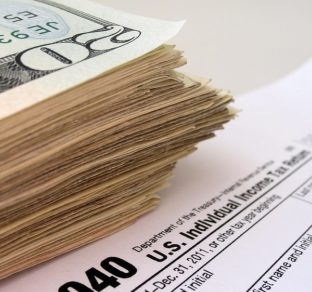 Photo by 401calculator.org

Remember when you first started earning a decent salary, and it seemed as if everybody — your parents, your boss, the nice lady in Human Resources and, of course, your tax preparer — all told you to put as much money as you could into your employer’s 401(k) plan?
Grab the employer match, they said. Get the growth that the market has to offer. And take advantage of the tax break, for crying out loud. Why not avoid paying taxes on that money now, while you’re in a higher tax bracket, and worry about it later, when you’re in retirement?
But what they didn’t tell you then (because they probably didn’t know) is that as you kept stuffing money into that tax-deferred account, you were chaining yourself to a ticking tax time bomb.
Because there’s a good chance your tax rate won’t be lower when you retire. And if you don’t do something to help defuse the situation before you start withdrawing money from that 401(k) (or SEP IRA or 403(b)) for retirement, you could be sending a sizable chunk of your nest egg to the IRS every year.
Tax rates could rise
Tax rates may go up in the future. Don’t think so? Here are just a few points to consider:
Most people think taxes are too high now, but they could be much worse. They certainly have been in the past.
In 2019, the top rate is 37% for individuals whose taxable income is over $510,300 ($612,350 for married couples filing jointly). In 1944, the highest rate — for anyone who made over $200,000 — was 94%. And the top rate stayed high for decades. It wasn’t until 1987 that it dropped below 40%.
The current rates, dictated by the Tax Cuts and Jobs Act of 2017, will end on Dec. 31, 2025, and no one knows where they’ll go from there.
The national debt is sitting at more than $22 trillion, and it’s growing by the second. Most experts agree the only clear way to help reduce the country’s deficit and pay down that debt is for the government to collect more money. (That usually means higher taxes.)
A large percentage of the federal budget goes toward various kinds of social insurance, including Social Security, Medicaid and Medicare. Those programs are funded by dedicated taxes that no longer generate enough revenue to cover their costs. Our leaders can either cut those programs or raise taxes to pay for them.
Two words: baby boomers. By 2030, when all members of the baby boom generation have reached age 65, the Pew Research Center projects that 18% of the nation will be at least that old. As the aging population continues to tap into Social Security, Medicare and other benefits, it can only further drain the system.
Tax-cutting strategies
So, you basically have two choices. You can ignore the data, the trends and the experts and see what happens. Or you can incorporate some tax strategies into your retirement plan now, bring some balance to your portfolio, and maybe even get yourself to a tax rate of 0% with these steps:
Make a list of all your investments. Recognize that your investments fit into three different tax buckets: tax always (brokerage accounts, CDs, etc.); tax later (401(k)s, 403(b)s, traditional IRAs); and tax never (Roth IRAs, cash value life insurance, municipal bonds).
We believe it makes sense for many people to work on a strategy to move money from the tax-always and tax-later buckets into the tax-never bucket. And if possible, do it in the next five years, before the current tax reforms sunset.
As with most investment decisions, the right strategy for you will be based on your personal situation.
One option is to do a Roth IRA conversion — move money from a traditional IRA or 401(k), pay taxes on it at today’s rates, and then let the funds grow inside the Roth, knowing the principal and earnings will never be taxed again. You can do this all at once or, to keep the tax bite lower as you go, convert the funds over a period of years.
Another option is to take the money out of your tax-deferred account and put it into a cash value life insurance policy from which you can take policy loans tax-free. (This is a more complex strategy, however, with some risks. So, it’s best done with the help of an experienced financial professional.)
No matter which strategy you choose, if you’re concerned about the money that’s piling up in your tax-deferred accounts, don’t delay. Help defuse the ticking tax bomb before it can blow up your retirement plan.
John Creekmur, CFP, is co-founder of Creekmur Wealth Advisors. Kim Franke-Folstad contributed to this article.
This article was written by and presents the views of the authors, not the Kiplinger editorial staff. You can check adviser records with the SEC or with FINRA.
© 2019 The Kiplinger Washington Editors, Inc. Distributed by Tribune Content Agency, LLC.
Money 2026
#The Savings Game #Medicare #Travel Tips #Retirement #Medigap #Love After 50 #Savvy Senior