


Solo aging in place can be bad for your health
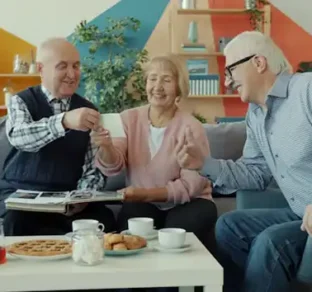 Photo by Vitaly Gariev | Unsplash

For most of human history, people did not age alone. They lived in villages, extended families and small communities because sharing resources was not just a nice idea — it was survival.
Somewhere between suburban sprawl and high-rise living, we replaced that model with something far more expensive and far more isolating: aging by yourself, in a house you can no longer maintain or in a facility you can barely afford.
That is why I developed “The Pod” — a new way for older adults to live together that is not an institution or a lonely apartment with a panic button. It is a small, intentional community.
Okay, I didn’t invent communal living; I just made it more fun. My Pod idea is that four to eight older adults who are friends would live together in a shared home or cluster of homes.
One of you may never have downsized after your spouse died, and this is a great way to use your space. Each person has a private bedroom and bath, but shares the kitchen, living areas, outdoor space and — most importantly — daily life.
Think of it as a smart, modern version of the old neighborhood, designed specifically for people who want independence without isolation.
No long hallways. No corporate dining rooms. Just friends.
Older adults are cost-burdened
Across the U.S., many older adults want to age independently — in their own homes or apartments — but the financial realities make that increasingly difficult.
As a Harvard study deemed it, the key issue is housing cost burden, meaning people spend a high share of their income on housing. For older adults living alone on limited and, in many cases, fixed incomes, this translates into real insecurity.
According to research from the American Society on Aging (ASA), in 2023, about 33.5% of households with someone age 65-plus spent 30% or more of their income on housing costs.
Spending more than 30% of income on housing leaves less for essentials such as food, medicine, utilities or care services — pressures that mount especially quickly when income is fixed.
Homeowners aren’t the only group struggling; older renters are also hit. Rental costs have risen sharply in many areas, even as incomes for many older adults remain stagnant or grow very slowly. As of 2024, about 58% of older renters were also cost-burdened by housing costs, according to the ASA.
Even with Social Security or savings, millions of older adults have limited resources. As the National Council on Aging has highlighted, U.S. Census data shows that at least 15% of older people age 65-plus (more than 9 million people) live below the poverty line.
Aging has become brutally expensive. Between the rent or mortgage, utilities, food, transportation, home maintenance, health aides and emergency care, even middle- class retirees are being squeezed dry. One fall, one illness or one broken furnace can blow up a budget.
Housing costs can be bad for your health
As people age, so do their houses, and repairs are costly. Many homes may also require accessibility modifications that can be expensive.
Living alone means all housing costs fall on one person. When utilities, property taxes, maintenance and care costs all rise while incomes, especially fixed incomes, lag behind, many older adults end up:
- Cutting back on healthcare, food or utilities
- Delaying necessary home repairs or mobility modifications
- Facing instability or even homelessness
- Relying on family or community support
- Becoming depressed
- Becoming sick
These pressures make independent living far less affordable and sustainable for a large and growing segment of older Americans.
My Pod idea
My Pod was going to be all women — friends of mine who were looking forward to our “golden years” together.
I had a big house that was going to be our central living quarters. Another prospective member had a beach house in Florida, and that was to be our winter retreat.
We were going to pool resources and share expenses. Kids and grandkids could visit, but not board with us. There was a cute B&B close by, and they could all stay there.
Our goal was to live, laugh, cook and support one another through thick and thin.
The idea is not gone, but life happened. I had to sell my humongous home. A hurricane washed away my friend’s Miami home, and we still think we are young enough to live separately. We will eventually create our Pod.
Fewer expenses, more security
Here’s the part people miss: The Pod is not just cheaper; it is financially safer.
When you live alone and something goes wrong, you pay for it alone. In a Pod, costs, risks and labor are shared, so monthly expenses drop dramatically.
The Pod shares utility bills, lawn service, even in-home caregivers. A Pod can often operate at less per person than living alone — or in assisted living — while providing more support and safety. That is not theory. That is math.
A Pod is safer, too. After all, someone notices if you do not come down for breakfast. Someone helps if you twist your knee. Someone calls your doctor before it becomes an emergency.
That reduces hospital stays, delayed care and catastrophic expenses.
We have been sold the idea that “aging in place” means staying in a house you can no longer afford or manage. The Pod offers a better version: aging in community. Loneliness is expensive. Community is preventive medicine.
You still have your own space. You still make your own choices. You just don’t have to do everything alone — or pay for everything alone.
And in an economy where housing costs, healthcare and inflation are squeezing older Americans harder every year, that difference can mean everything.
The Pod is not a luxury. It is the future of affordable aging.
Neale Godfrey is a New York Times bestselling author of 27 books that empower families (and their kids and grandkids) to take charge of their financial lives.
© 2026 The Kiplinger Washington Editors, Inc. Distributed by Tribune Content Agency, LLC.
Housing 2026
#Independent Living #Housing #Savvy Senior #Retirement #The Savings Game






