


I never thought I would have lung cancer

Like so many who get the devastating diagnosis of lung cancer, I never thought it would happen to me. After all, I never smoked, never lived with a smoker, always exercised, maintained a steady, healthy weight and ate reasonably well. I thought I was exempt.
But as it turns out, lung cancer is the leading cause of cancer-related death in the United States, and one in five people diagnosed with it never smoked. As November is Lung Cancer Awareness Month, I wanted to tell my story.
As with many people, my lung cancer was found by chance. During my annual physical last fall, I told my doctor I had been told by urgent care that I had pneumonia, which turned out to be false. However, after looking at an x-ray from the year before, when I did have pneumonia, my doctor noticed the spot was in the same location.
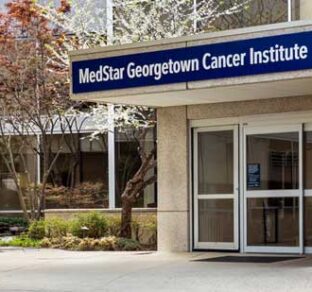
She sent me for a CT scan, and then to a pulmonologist, who scheduled a biopsy. Neither my doctors nor I were thinking lung cancer. But a week later, the results were in, and I was immediately given an appointment with an oncologist at Med- Star Georgetown University Hospital.
There, Dr. Stephen Liu gave me the bad news: Not only was it lung cancer, but the worst kind, small cell lung cancer (SCLC). Only 15% of patients have this aggressive form, and they’re usually smokers.
I was hysterical when I got home, and while I usually tell others to get a second opinion, there was little time. I quickly researched my doctor, who is a leading expert in the field, and started treatment immediately.
I had 12 rounds of chemotherapy. Fortunately, unlike years ago, patients are given anti-nausea drugs, which actually work. Hair loss is a given. After that, I had 36 rounds of radiation.
Treatment was a long, long ordeal. My husband, Paul, has been my rock, accompanying me to appointments and constantly researching the disease and possible new treatments.
When Thanksgiving came, we had to stay home, since I was immunocompromised. And when the flu became rampant, we isolated like we had during the pandemic.
Still, family and friends called daily. And when I finally reappeared in the world, my three adorable little grandchildren were the best medicine.
Immunotherapy has fewer side effects
With SCLS, stray cancer cells can still exist even after chemo and radiation, so I started immunotherapy, a relatively new class of treatments for lung cancer. It involves an infusion every four weeks.
With so many infusions, I felt like a pincushion. Nurses told me I was a “hard stick,” and it was difficult to find a good vein. At one appointment, after four punctures, I asked for an expert. Carol in the research infusion department proved to be the guru: one stick, and that was that.
Another difficult part of this disease is that you need to get scans (CT and an MRI) every three months and a PET scan every year. I’m not sure who coined the term “scanxiety,” but it’s real and very common. It’s hard to control your emotions before and after a scan while you wait for the results.
Advice for patients
If you are diagnosed with any kind of cancer, don’t be afraid to speak up. Ask about treatment options and clinical trials and get second opinions as you move along. Follow up when the team doesn’t get back to you quickly enough.
Stay on top of scheduling; there is a lot of it. And recruit someone to help you and be with you at every appointment, be it a family member or close friend. If you’re alone, ask your doctor if you can record the appointment so you don’t forget the details.
After you ring the bell signaling the end of your initial treatments, you realize your cancer journey isn’t over. The appointments don’t end, and every time you have any pain, there is a constant worry the cancer could be back.
You also realize you aren’t who you were before the cancer. There are times when you feel perfectly normal, find joy in each day, and maybe even make plans to travel. I try to walk, exercise and even play golf.
But then there are other times when you look in the mirror, and the image doesn’t look like you. You worry more, worry that something suspicious will show up on your next scan, worry that you don’t have a future.
One organization we found, LUNGevity. org, has been a huge help. It provides free education and support, builds community and hope, and raises funds for research to advance better detection and treatment.
This November, the LUNGgevity Foundation will place white flags on the National Mall in front of the Capitol, representing the roughly 120,000 lives lost to the disease each year.
I’ve learned a lot from their regular webinars featuring experts discussing new drug developments and other treatments.
Also, they have support groups on Zoom and Facebook where you can connect with others who have the same disease. Even if you have a top physician, it helps to hear other patients’ experiences with different treatments and get some tips for mitigating side effects. Most importantly, it gives hope for the future.
Alice Shapin is a longtime travel writer for the Beacon.
Health 2026
#Recipes #Savvy Senior #Alzheimer’s Disease #Dear Pharmacist #health #vaccine #Nutrition #Health Study #Mayo Clinic