


Is your breakfast cereal actually healthy?
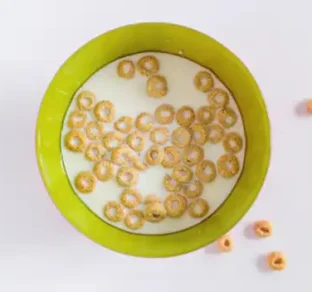 Photo by freestocks | Unsplash.com

I have a confession: I like cereal. And not just a little.
When I was a kid, I’d have ready-to-eat breakfast cereal in the morning and again after dinner as dessert. Raisin Bran, Corn Flakes and Rice Krispies were in regular rotation. Cereal is still on my short list of favorite foods.
I’m not alone in this. In the U.S., more than a quarter of children and adolescents devour ready-to-eat cereal for breakfast most days of the week. Among adults, around half eat cereal at least once or twice a week. Beloved athletes often appear on cereal boxes, and a number of celebrities have proclaimed their love for the stuff, including Jerry Seinfeld and Justin Timberlake.
Many companies tout cereal as a healthy choice. A 2025 study of more than 600 breakfast cereals disputes this, particularly for many cereal all-stars.
How healthy are breakfast cereals?
Not so much. Many — perhaps, most — of the biggest names in the cereal world have a lot of sugar, minimal protein before adding milk, a bunch of additives and not much else. Some don’t even have much fiber, a feature that is supposed to make breakfast cereal a healthy choice.
As for the 120- to 150-calorie count often listed on the side of the box, it turns out that the actual portions many people consume (including me) can easily soar past 300 calories at a time.
And what about eye-catching boasts like “heart healthy,” “high in vitamins,” “all natural,” or “part of a healthy breakfast”?
Unfortunately, researchers have found little connection between health claims and overall nutritional content. In fact, for many cereals, the bulk of the nutritional value relies on something that’s not even in the box: milk.
A closer look at seven popular breakfast cereals
The seven top-selling breakfast cereals in the U.S. are: Cheerios, Frosted Flakes, Honey Nut Cheerios, Honey Bunches of Oats, Cinnamon Toast Crunch, Froot Loops and Lucky Charms.
Most are sweet, highly processed, and have lots of empty calories. Some add vitamins, though usually in small amounts, while others sprinkle in sodium (salt) you don’t need.
But breakfast cereals are getting healthier, right?
A study published in May 2025 found just the opposite. It looked at the nutritional value of 1,200 ready-to-eat cereals marketed to children that were new or reformulated between 2010 and 2023 and noted a clear trend in the wrong direction: increasing amounts of fat, sodium and sugar along with decreasing protein and fiber.
Fortunately, there are efforts underway to improve the types of cereals kids eat: USDA guidelines for school breakfast programs this year aim to gradually reduce the amount of sugar and salt and increase the amount of whole grains required. (Cutting out artificial colors and flavoring won’t transform these cereals into healthy or nutrient-dense foods.)
Better breakfasts
So, what’s a breakfast eater to do? When it comes to breakfast choices, surely we can do better than sugar-packed, high-calorie, low-nutrient cereals that are hyped by marketers (especially to kids) and sell so well.
One option, of course, is to switch to healthier breakfast foods like oatmeal with fruit and nuts, eggs, yogurt with fruit, or peanut butter on whole-grain toast.
But if you’re as stuck on ready-to-eat breakfast cereal as I am, check the nutrition label for these healthy aspects:
- whole grain as the first ingredient
- at least 2.5 grams of fiber per serving, though at least 5 grams per serving is even better
- minimal or no added sugar or sodium
- 150 calories or less per serving — and measure that serving, which is often ¾ to 1 cup (far less than the average bowl holds!)
- a short ingredient list with items you recognize as food (rather than things like butylated hydroxytoluene or food dyes).
Examples of cereals that fulfill most of these include Shredded Wheat, Kashi Go Lean, Cheerios, Weetabix and All-Bran. [Ed. Note: Wheat-based products such as Cheerios contain glyphosate, a weedkiller linked to cancer, and chlormequat, a pesticide also linked to cancer. The EPA says that these trace amounts are well below the levels considered safe for human consumption.]
The bottom line
If you like ready-to-eat breakfast cereal, it’s not the worst thing out there, especially when served with skim or non-dairy milks.
But be selective and careful about portion control. A healthy breakfast helps fuel your body and should be more than sweet, crunchy junk food masquerading as a nutritious meal.
Robert H. Shmerling, M.D., is a senior faculty editor and Editorial Advisory Board member at Harvard Health Publishing.
© 2025 Harvard University. Distributed by Tribune Content Agency, LLC.
Health 2026
#Dear Pharmacist #Recipes #Savvy Senior #Alzheimer’s Disease #health #vaccine #Nutrition #Health Study #Mayo Clinic






