

Understand burns and how to treat them

Dear Mayo Clinic:
What’s the best way to treat a minor burn? At what point does a burn require medical care?
The level of care needed for a burn depends on how extensive the tissue damage is from the burn. Minor burns can often be treated at home without seeing a healthcare provider.
Burns considered “minor” include first-degree burns and second-degree burns that are no larger than two inches in diameter.
A first-degree burn involves only the top or outer layer of the skin (epidermis). Signs and symptoms of a first-degree burn include red skin that may be mildly swollen and painful to touch.
A second-degree burn involves the outside layer of the skin and the next layer of skin (dermis). Signs and symptoms of this type of burn include pain, swelling, intensely reddened skin, blistering and a splotchy appearance.
Immediately evaluate in a medical setting any other type of burn that covers a larger area of the skin. A healthcare provider also should evaluate a burn that shows signs of infection, such as oozing from the wound and increased pain, redness and swelling.
Cool water and bandages
For minor burns, prompt at-home care is often all that’s needed. First, put the burn under cool (but not cold) running water long enough to reduce the pain, which may take about 10 to 15 minutes.
If running water isn’t available, immerse the burn in cool water, or apply a cool, wet compress. Don’t put ice directly on the burn, however. Doing so can cause further damage to the tissue.
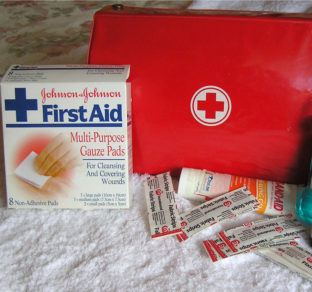
Dry the area with a clean cloth, and apply a sterile, lightly wrapped bandage. Don’t apply ointments or butter to a burn, as these can hold heat in the skin — causing further damage — in addition to increasing the risk of infection. If needed, take over-the-counter pain medications for pain relief.
If the burn is caused by a chemical, make sure the chemical, or any clothing or jewelry in contact with the chemical, are removed. If possible, use gloves so that you don’t get burned elsewhere or so that someone helping you doesn’t get burned.
Follow-up care
Don’t break blisters if they form. If a blister breaks inadvertently, wash the area with soap and water, apply an antibiotic ointment, and cover the area with a bandage. See your healthcare provider if large blisters develop, as these blisters may need to be removed.
Monitor the burn daily after each gentle washing and dressing change. Evaluate the burn for spreading of heat, redness or swelling, which may indicate a skin infection. If the wound isn’t healing, see your healthcare provider.
A burn requires immediate medical attention if it covers a large area of the body, or if it involves much of the hands, face, feet, genitals, buttocks, eyes, mouth or a major joint.
Second-degree burns larger than two inches; an electrical burn; or more severe, third-degree burns — where skin is burned away, charred black or appears dry white — all require emergency medical attention.
— Henry Schiller, M.D., Trauma, Critical Care and General Surgery, Mayo Clinic, Rochester, Minn.
Mayo Clinic Q & A is an educational resource and doesn’t replace regular medical care. E-mail a question to mailto:MayoClinicQ&A@mayo.edu. For more information, visit http://www.mayoclinic.org.
© 2018 Mayo Foundation for Medical Education and Research. All rights reserved. Distributed by Tribune Content Agency, LLC.