


Walking faster can help prevent frailty
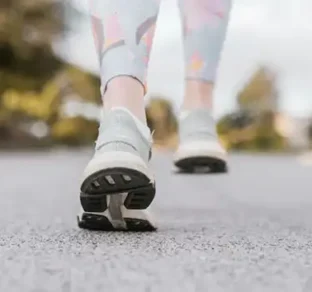 Photo by Sincerely Media | Unsplash

You may have heard the expression “old and frail.” It conveys a clear picture of a particular type of older person who tends to be weak, thin and easily injured.
Frailty does not have to be synonymous with aging, although a significant number of people do develop this condition as they advance in years. In fact, between 12% to 24% of older adults worldwide experience health issues related to frailty, which put them at greater risk of fatigue, muscle weakness, falls, incontinence, depression and unexplained weight loss.
Unfortunately, some factors, such as genetics, can make you more susceptible to frailty and are out of your control.
However, the good news is, recent research shows there is one very simple thing that you can do as you get older to significantly reduce your risk. You just need to pick up your pace.
Add a little speed
According to research published last year in PLOS One, walking just slightly faster than your comfortable walking cadence could significantly decrease the chance of frailty.
Walking cadence refers to the number of steps that you take per minute. To determine its impact, researchers studied older adults who were classified as either frail or prefrail. These adults were asked to take part in structured walking programs with a device to measure cadence fitted to their thighs.
Study participants were divided into two groups, with one group told to walk “as fast as safely possible,” and the other told to maintain a comfortable pace.
Among the group told to go faster, those who walked 14 or more steps above their normal cadence experienced substantial improvements in functional capacity.
With an additional 14 steps, the walkers ended up walking roughly 100 steps per minute.
Picking up the pace, even just a bit, helped the retirees go for longer distances without getting tired or having to sit down, according to the study’s lead author, Dr. Daniel Rubin, associate professor of anesthesia and critical care at the University of Chicago Medical Center.
“This is a key finding because it shows that even modest increases in walking intensity can lead to meaningful improvements in physical function, even among frail or prefrail older adults,” Rubin explained to Medical News Today.
“The 14-step threshold is important because it gives a clear target for older adults to increase their intensity.”
Apps and devices can help
Although walking is recommended to retirees who need to improve their health, it can be hard to know how fast to go.
The new study is an important one because it provides an objective measure of how much faster retirees should try to walk in order to experience health improvements.
“One of the challenges of prescribing walking is to convey to the patients how much intensity they should walk,” Rubin explained.
Traditionally, a so-called “talk test” is recommended, which suggests you walk fast enough to make singing hard, but not so fast that you can no longer have a comfortable conversation.
Some retirees are also advised to walk at a pace of three to four miles per hour. However, Rubin believes both of these existing tests are too subjective or too hard to measure.
“Those are difficult for older adults to guide themselves,” Rubin said. “Here, we provide them with an objective measure that they can increase the number of steps per minute that they walk to increase their intensity.”
Walking 14 more steps, on the other hand, is simple, objective, and can be easily measured with an app or pedometer.
While Rubin doesn’t trust the analytics on phones, researchers built an app called Walk Test that ensures more accurate measurements.
The app is not yet available, but researchers intend to release it after they further develop and scale it.
In the meantime, a smartphone app may be good enough to give you a general picture of how fast you’re walking.
Or you may want a smartwatch with a fitness tracker that works with your phone, providing heart rate and other helpful information.
If you try to up your pace by just a few extra steps, that simple move could make all the difference in ensuring that you stay strong as you age.
© 2026 The Kiplinger Washington Editors, Inc. Distributed by Tribune Content Agency, LLC.
Health 2026
#Dear Pharmacist #Recipes #Savvy Senior #Alzheimer’s Disease #health #vaccine #Nutrition #Health Study #Mayo Clinic






