


What is a clinical trial and why participate?
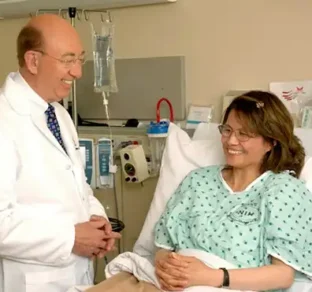 Photo by National Cancer Institute | Unsplash

Clinical trials are the best way to study new, investigational treatments or vaccines to learn if they work and how safe they are.
If you have ever taken medicine or gotten a vaccine, then you have benefited from clinical trials.
Trials often try to answer specific health questions, like if a new treatment has any effect, if it could work better than an existing treatment, or if it’s safe for people to use.
Throughout history, clinical trials have led to a lot of important medical discoveries that help researchers find better ways to diagnose, prevent and treat diseases. These medical discoveries can help people to live healthier, longer lives.
Types of clinical trials
Some treatments in clinical trials have not been approved by a government agency, which is why they are called “investigational” treatments. If clinical trials show that a new treatment works and is safe, then it can be approved to be used by the people who need it.
Not all clinical trials test a new treatment or vaccine. “Observational” studies collect information about people’s health during their normal care. This helps researchers learn more about specific health issues.
If you agree to participate in a clinical trial, you might receive a trial treatment or something else, such as a placebo, which looks or tastes like a treatment but does not have any actual treatment in it. You also might get a treatment that is already approved for public use.
The treatment may be given as a pill, injection, infusion or in other ways. It’s important to remember that participants do not get to choose which treatment they get; that’s usually decided randomly.
In some trials, you might only give permission for researchers to collect health information through surveys or medical records.
Some clinical trials include “healthy” participants, who do not have the condition the trial is studying.
Time commitment
Trials can last weeks, months or even years. The number of visits and how long you may be in the trial overall can be different for every trial.
In some cases, you may need to visit the trial site for tests and treatment, and for doctors to check on your health. These visits can also be at your home or through telemedicine.
Researchers do a lot of preparation before a trial starts, and trials need more review after all the participants have left. It can take many years before a treatment is approved and ready to be used by the public.
Types of trials
Clinical trials have four phases. The trials have different purposes at each phase and help scientists answer different questions:
Phase 1: Researchers test a new treatment in small groups of participants to learn how safe it is and how much people can safely take. They also sometimes want to learn how the treatment works in the body.
Phase 2: The trial treatment is given to larger groups of people to learn how well the treatment works and more about how safe it is.
Phase 3: The trial treatment is given to even larger groups of people to confirm how the treatment works and learn even more about its safety. Researchers often compare it to other treatments that exist, or a placebo.
Phase 4: At this phase, the treatment has been approved by a government agency to be used by the public. Phase 4 trials aim to learn more about the risks and benefits of a treatment, as well as the best way to use it.
Phase 1 and 2 trials are usually shorter than Phase 3 and 4 trials. If the researchers in any phase think that a treatment does not work, they might not do any more clinical trials for that treatment.
Your rights
Being in a trial is optional. Agreeing to be in a trial does not take away any of your rights.
You can stop being in a trial at any time and for any reason. The trial staff will help you do this safely.
This article is courtesy of the Center for Information & Study on Clinical Research Participation (CISCRP). Reprinted with permission.
For more information about clinical trials, including stories from people who have participated in them, visit ciscrp.org.
Health 2026
#Dear Pharmacist #Recipes #Savvy Senior #Alzheimer’s Disease #health #vaccine #Nutrition #Health Study #Mayo Clinic