


Why some retirees age so well overseas
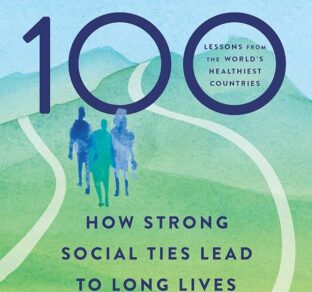

For his new book, Healthy to 100, longevity researcher Ken Stern wanted to answer a question that nagged him: Why do so many people in some European and Asian countries live long, healthy lives? How can Americans be like them?
For six months in 2024, he traveled to five of the most successful aging nations — Italy, Japan, Singapore, South Korea, and Spain — to find out why their average life expectancies were often six years longer than ours and to interview residents in their 70s, 80s, 90s and 100s.
Stern, founder of The Longevity Project research initiative and host of the Stanford Center on Longevity’s Century Lives podcast, discovered a surprising common thread. It wasn’t about how the older residents took care of their health, ate, exercised or managed their finances. It was about their strong social connections.
Other longevity researchers have also seen a link between social connection and extended, healthy lives. In Healthy to 100, Stern writes that Brigham Young University professor Julianne Holt-Lunstad reviewed 148 global studies and found social connection increased the likelihood of surviving in any given year by more than 50%.
“When people ask me how they can be socially connected, they’re generally thinking about how to be the life of the party. That’s not what it’s really about,” said Stern. “It’s about putting people next to people in a purposeful way.”
Stern offers four ways to foster social connections, based on what he learned for the book:
1. Keep working
Japan offers a great model, Stern said. “Japan is famous for its stressful work culture, but its work economy for people in the second half of life is rather different,” Stern said. “It’s built around part-time work and being with other people.”
Japan gives employers financial incentives to support older workers and has the highest percentage of people age 65 and older who work — roughly 25%. The country’s Silver Jinzai jobs program has found part-time jobs for nearly 700,000 residents age 60 and older.
One poll found that 80% of older, Japanese workers said they’re employed because it’s good for their health and for social connection, Stern said.
An 88-year-old woman at a Japanese food services company that mostly hires women age 60 and older told him: “I love coming to work, being with my friends. It gives me purpose and meaning to my life that would not otherwise be there.”
In 2026, according to LinkedIn’s 25 Big Ideas That Will Define 2026, U.S. businesses will be pushed to create programs to support older workers.
“Leaders will increasingly view longer lives as an economic opportunity — and will redesign work to match a future where multidecade careers become the norm,” wrote LinkedIn senior managing editor for news, Satoshi Ebitani.
Stern suggests older Americans look for jobs at the 3,000 companies and organizations that have taken the AARP Employer Pledge, committing to age-inclusive workforces.
He’s also a fan of encore careers, in which people 60-plus work to find meaning and purpose.
2. Get out and about
Some social connections are often from being with family, friends and work colleagues. But, Stern said, they can also come through daily interactions with “consequential strangers” — such as people you chat with on a bus. “These connections test your social skills, but also reflect that you’re moving and not stuck at home,” said Stern.
Intergenerational housing and activities boost social connections, too.
“Singapore works obsessively to keep generations together in housing,” Stern said. There, 90% of homes are owned by the government, and Singapore offers a tax incentive for people living within a kilometer of other generations.
To avoid being isolated at home in the U.S., Stern said, you might consider moving into multigenerational housing. He also recommends looking for a place where you’ll participate in activities with other residents, such as active-aging retirement community The Villages in Florida.
During his travels, Stern noticed that Spain and Italy are bonding younger and older community members by making senior centers intergenerational.
At Spain’s Ourense Intergenerational Center, a senior center/preschool run by a provincial government, adults ages 50 to almost 100 spend time with children. In Bergamo, Italy, Stern saw a network of senior centers being transformed into Centers for All Ages.
To find such places near you, he said, consult the Generations United advocacy group/Ohio State University list of 110 U.S. places pairing younger and older people.
3. Take advantage of lifelong learning opportunities at colleges
They were abundant in the countries Stern visited.
In South Korea, Stern said, virtually every municipality has a lifelong learning institute. One woman in her 60s told him she thinks taking classes at the Osan Lifelong Learning Institute helped her regain a sense of purpose and recover from pancreatic disease.
Italy is home to the University of the Third Age, whose 6,000 mostly retired members have taken more than 160 courses. Singapore’s National Silver Academy offers a variety of courses for older citizens.
“Learning is not something we stop doing at 18 or 21,” Stern said. “It’s something we need to do over the course of our lives.”
He recommends looking for local college discounts for older learners. Many states provide essentially free tuition to people age 60 and older, he noted. Some public universities waive tuition and most fees, too.
4. Volunteer regularly
Stern’s book cites numerous studies showing that volunteering can improve older adults’ physical and mental health. Volunteering might slow the aging process.
He saw elder volunteers all over Italy; older people typically staff senior services there.
“Italy really invests in volunteerism,” Stern said. In Omegna, members of the Pro Senectute (“For the Elderly”) group of semi-retired volunteers he met enjoyed running intergenerational activities, including a kids’ playground and an adult clubhouse.
The more time you spend volunteering, the larger the health returns, Stern said.
All in all, Stern said, rethinking social connections comes with reconceiving what the second half of life can be.
“People have exercise plans and nutrition plans,“ he noted, “They need to start having social connection plans.”
© 2026 The Kiplinger Washington Editors, Inc. All rights reserved. Distributed by Tribune Content Agency, LLC.
Health 2026
#Dear Pharmacist #Recipes #Savvy Senior #Alzheimer’s Disease #health #vaccine #Nutrition #Health Study #Mayo Clinic






