



How to get the most from a clinical trial
For most of his life, Steve Sultanoff, 66, has had high cholesterol, a problem that runs in his family. When he was younger and didn’t have great health insurance, he decided to participate in clinical trials to get better healthcare and help discover new medicine that might benefit him. He was put on statins, but those gave him muscle aches. It took 30 years of participating in some... READ MORE

Ginger spices up foods and relieves pain
Bold, aromatic and pungent, ginger (also called ginger root) has spiced up palates and herbal remedies for thousands of years. The folklore Thought to be native to southeastern Asia, ginger had long been prized in India, China and the Middle East, before the Chinese brought it to Rome when it grew in demand and became widely traded. It’s been used extensively in the treatment of... READ MORE

Q and As on fainting and forgetfulness
Q: What happens inside the body when a person faints? A: Fainting occurs when something interrupts blood flow to the brain. Although usually harmless, fainting can cause injuries and sometimes signals a problem with the heart or circulatory system. If you faint, it’s worth talking with your doctor, especially if there doesn’t seem to be an explanation. Some basic physiology... READ MORE

Celery boasts numerous health benefits
Celery juice has become a sensation recently. That fad aside (and with the lack of solid support for many of the claims), here’s the lowdown on celery’s nutrients and some of its research-backed potential health benefits: Celery is low in calories and hydrating. One large stalk contains a mere 7 calories and packs 2 ounces of water. That means that chowing down on six stalks adds up... READ MORE

What diabetics should know about COVID
Dear Savvy Senior, My husband and I are both in our late 60s, and have diabetes. We would like to find out if our diabetes increases our risk of getting the coronavirus. Concerned Diabetics Dear Concerned, Currently, there’s not enough data to show that people with diabetes are more likely to get coronavirus (COVID-19) than the general population. But the problem for diabetics is, ... READ MORE

Blood test can detect some early cancers
For the first time, a blood test has been shown to help detect many types of cancer in a study of thousands of people with no history or symptoms of the disease. The test is still experimental. Even its fans say it needs to be improved and that the recent results are not ideal. Yet they show what benefits and drawbacks might come from using these gene-based tests, called liquid... READ MORE

How long before we know if reopenings cause virus spikes?
States in the U.S. and countries worldwide are cautiously relaxing restrictions while watching for potential spikes in coronavirus infections. Getting the timing right is complicated. Disease trackers note the impossibility of seeing clearly what’s happening without widespread testing. Here’s a look at when we might start to see any health impacts of reopening: When are we... READ MORE
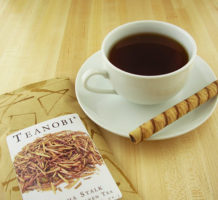
Have you heard of the other green tea?
It seems there’s another member in the green tea family. And it’s not even green! That’s because hojicha (pronounced HOE-jee-cha) is made from roasted green tea leaves, stems and stalks, giving it an earthy reddish-brown hue that makes it look more like black tea or coffee than its verdant cousins. Very popular in Japan, mellow, slightly sweet and smooth, hojicha (also... READ MORE

Repetitive motion injuries are on the rise
Dear Mayo Clinic: Earlier this year, I began experiencing some pain in my right hand and wrist. I am a systems engineer and have always done a fair amount of typing at work. Now, with the COVID-19 pandemic, I am working at home and spending even more time on a keyboard. I’m finding the pain has increased, and I’m also having some new tingling and numbness in my hand and... READ MORE

Recent Alzheimer’s prevention research
Research from the Keck School of Medicine at the University of Southern California (USC) shows that damaged capillaries in the brain — independent of plaques and tangles of abnormal proteins — may set the stage for Alzheimer’s decades before memory problems emerge. “The fact that we’re seeing the blood vessels leaking, independent of tau and independent of amyloid, when... READ MORE
Health 2026
#Dear Pharmacist #Recipes #Savvy Senior #Alzheimer’s Disease #health #vaccine #Nutrition #Health Study #Mayo Clinic






